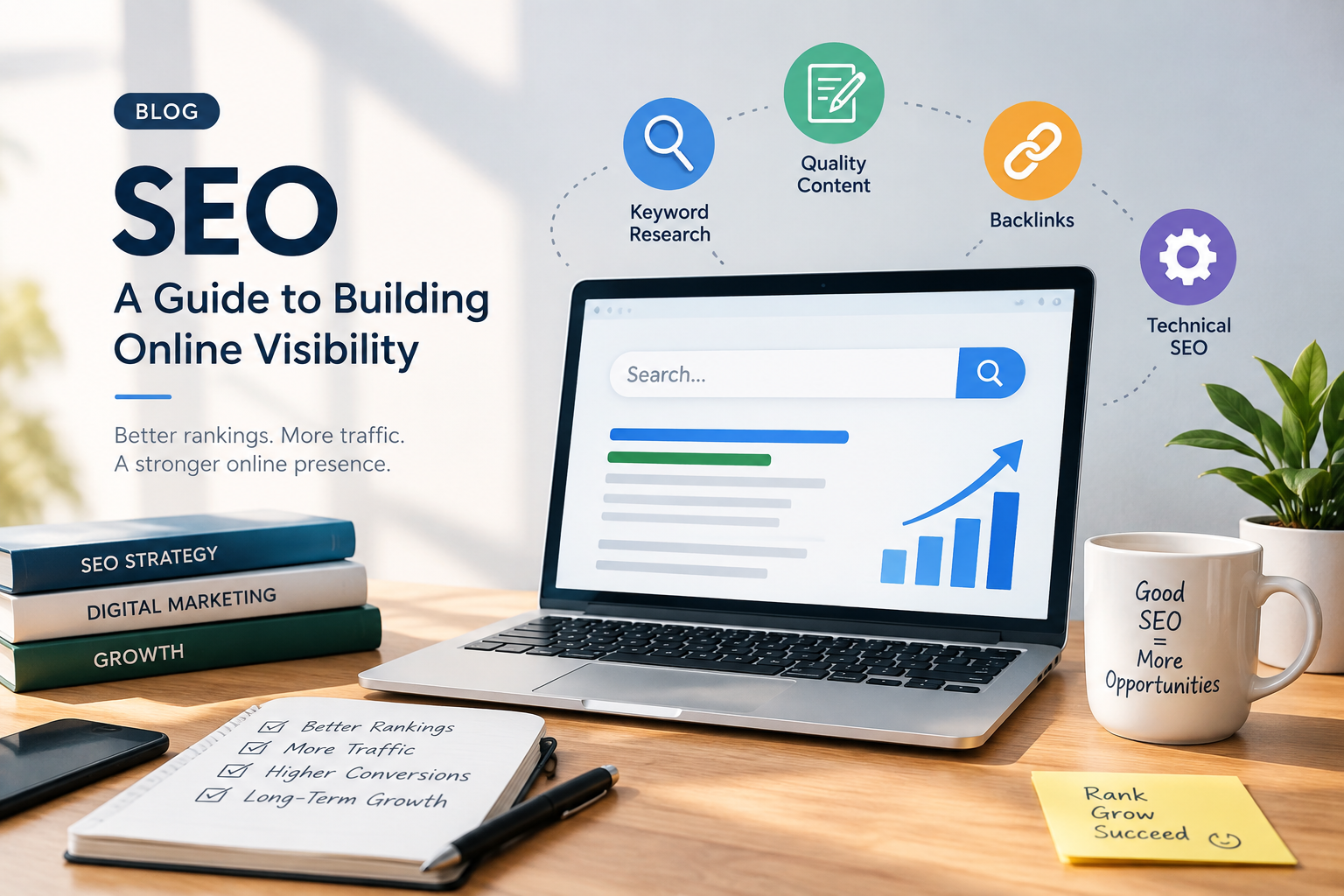
Search Engine Optimization (SEO) is an important part of digital marketing that helps businesses improve their visibility on search engines such as Google. When people search for products, services, or information online, SEO helps websites appear in relevant search results and attract organic visitors.In a competitive digital environment, simply having a website is not enough. Businesses need to make their websites useful, accessible, and easy for both users and search engines to understand. SEO helps improve different aspects of a website, from its content and keywords to its technical performance and overall user experience.SEO involves understanding what people search for, creating useful content, improving website structure, and providing a better experience for users. A well-planned SEO strategy can help businesses increase online visibility, reach the right audience, build credibility, attract potential customers, and support long-term digital growth.
Key Elements of an Effective SEO Strategy
Keyword research is one of the first steps in an SEO strategy. It involves identifying the words and phrases people use when searching for information, products, or services online. Understanding these search terms helps businesses create content that matches the interests and needs of their target audience.Effective keyword research considers factors such as search relevance, competition, and user intent. Instead of focusing only on popular keywords, businesses can also target specific and relevant search phrases that are closely connected to their products or services.
Quality Content
High-quality content is an important part of a successful SEO strategy. Search engines aim to provide users with useful and relevant information, so businesses should create content that answers questions, solves problems, and provides genuine value.Content can include blog articles, guides, service pages, product descriptions, videos, and other useful resources. Well-written content should be easy to understand, relevant to the audience, and naturally include important topics and keywords.
On-Page Optimization
On-page SEO focuses on improving elements within individual website pages. This includes page titles, headings, URLs, images, keywords, descriptions, content structure, and internal links.Proper on-page optimization helps search engines understand what a page is about and helps visitors find information more easily. A clear structure with useful headings, readable content, relevant images, and helpful internal links can create a better overall website experience.
Technical SEO
Technical SEO focuses on the technical structure and performance of a website. A technically healthy website makes it easier for search engines to crawl, understand, and index its pages.Important areas include mobile usability, page loading speed, website structure, crawlability, indexing, and secure website connections. Technical improvements can also contribute to a smoother experience for visitors across different devices
Monitor and Improve
SEO is an ongoing process rather than a one-time activity. Search behaviour, competition, search engine systems, and digital trends can change over time, so businesses need to regularly review their SEO performance.Important areas to monitor include organic traffic, search visibility, keyword performance, user engagement, and conversions. By analyzing this information, marketers can identify opportunities, improve existing content, fix issues, and adjust their SEO strategy based on performance.
Conclusion
SEO is more than simply trying to achieve higher search rankings. It is about making a website easier to discover, understand, and use while providing useful information to the right audience.By focusing on relevant keyword research, valuable content, effective on-page optimization, strong technical performance, and continuous monitoring, businesses can build a stronger online presence. A consistent SEO approach can help improve visibility, attract relevant visitors, build credibility, and create opportunities for long-term digital growth.